
From longevity territories to natural active ingredients
The history, science and vision behind LoguBlu.
Chapter I
A story of longevity
01
The Origins of the Blue Zones
LoguBlu draws its roots from the fascinating history of the Blue Zones, regions of the world where exceptional longevity is observed. Founded by Anna Rita Vacca, a biologist and quality manager from the pharmaceutical industry and a native of one of the "Blue Zones", LoguBlu relies on rigorous scientific expertise to select and enhance natural actives from these territories, with high potential for the health sector.
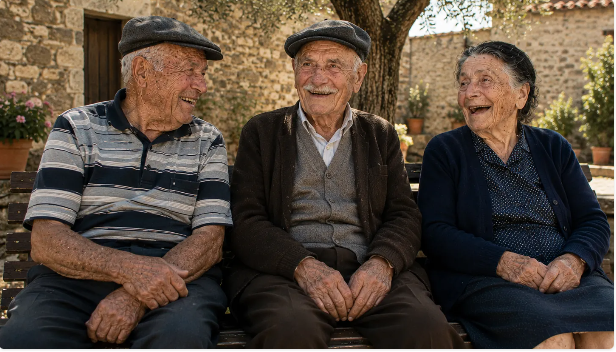
The remarkable longevity observed in these regions is associated with a set of interconnected factors: diet, daily physical activity, genetics, environmental factors, such as geographical isolation, social relationships and psychological well-being. Among these factors, plant resources play a central role: for generations, inhabitants have consumed a diet rich in vegetables, legumes, whole grains, wild herbs, fruits, medicinal plants, olive oil, nuts, sometimes a little fish, and very little saturated fat (Deiana et al., 1999; Poulain et al., 2004, 2021 et 2025 ; Mohol et al. 2025).
Regarding "Blue Zones", it is in Sardinia (Italy) that these factors began to be considered and studied.
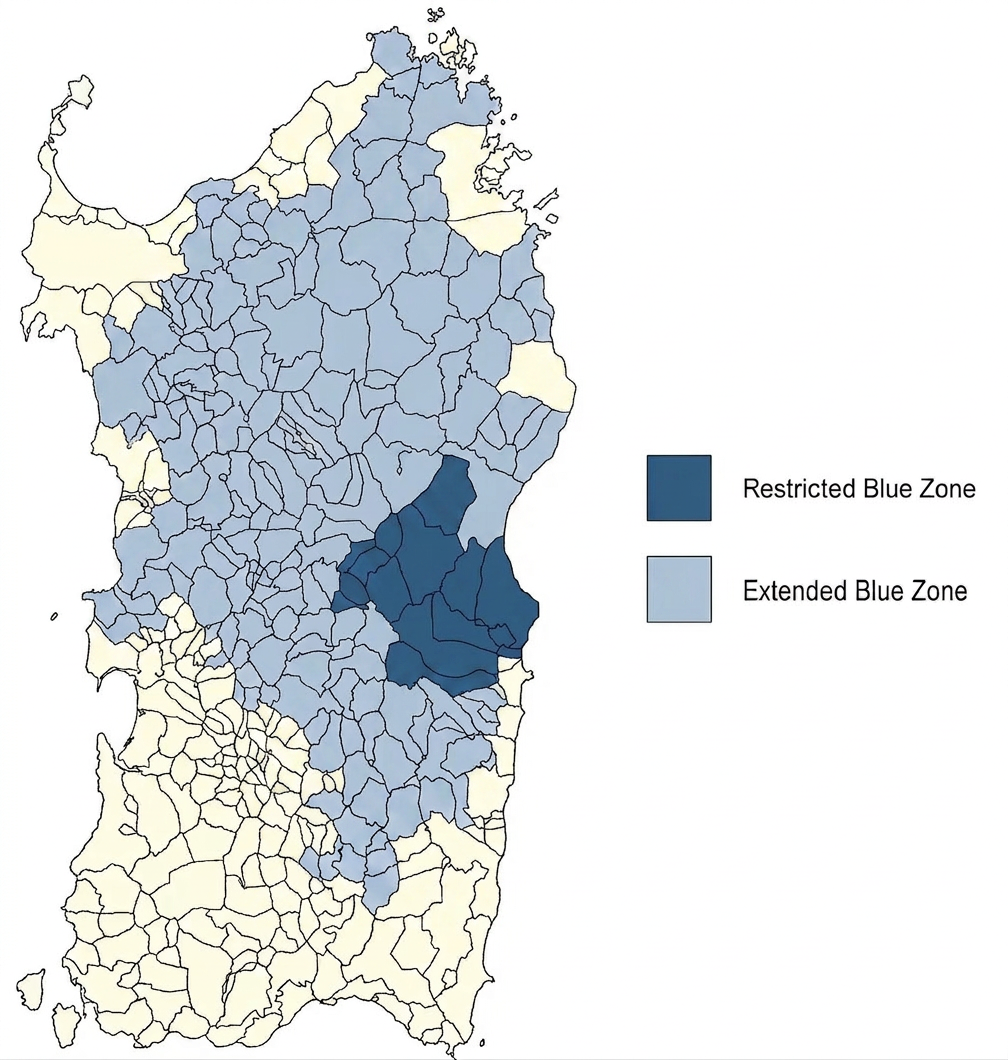
The first scientific publication devoted to Sardinian longevity is the study by Deiana et al., published in 1999. In the same year, Sardinian physician and epidemiologist Dr Giovanni Mario Pes also presented his research at the "Genes, Genealogies and Longevity" meeting held in Montpellier from 14 to 16 October 1999. The concept of "Blue Zone" was born in the early 2000s, when Belgian demographer Dr Michel Poulain and Dr Giovanni Mario Pes, through demographic studies conducted at the municipal level in Sardinia, identified an area with an exceptional concentration of longevity. This area was delimited in blue on a map, giving rise to the term "Blue Zone".
They distinguished a "Restricted Blue Zone", located mainly in Ogliastra and Barbagia, and an "Extended Blue Zone", from which the founder of LoguBlu originates, encompassing neighbouring municipalities with similar longevity profiles, although the phenomenon is more pronounced in the Restricted Blue Zone (Poulain et al., 2004).
In this study, the authors reported a female/male ratio of 1.35:1 in the Extended Blue Zone and 0.94:1 in the Restricted Blue Zone. By comparison, among centenarians alive in 2001, this ratio was 2.70:1 across Sardinia and 1.40:1 in the province of Nuoro.
A prevalence unmatched in Europe
Centenarians per 100,000 inhabitants
16.6
All of Sardinia
17.9
Nuoro province
10
Europe
Female-to-male centenarian ratio
1880–1900 cohort and centenarians in 2001
1.35:1
Extended Blue Zone
0.94:1
Restricted Blue Zone
2.70:1
All of Sardinia
1.4:1
Nuoro province
>5:1
European references, previous studies
02
FROM POPULATION LONGEVITY TO SKIN LONGEVITY: THE HEART OF OUR MISSION
While human longevity results from many interconnected factors, LoguBlu’s approach to skin longevity is based on the exploration of plant biodiversity across the entire Sardinian territory. Recognised for its exceptional botanical heritage, Sardinia represents a territory of particular interest for the identification and development of new natural ingredients dedicated to skin longevity. This vision also draws on local ethnobotanical knowledge, including traditional uses of plant resources for skin care and skin comfort, transmitted across generations.
Biodiversity
Sardinia is recognized as one of the major plant biodiversity hotspots of the Mediterranean basin. Approximately 15% of the endemic plant species of the Western Mediterranean are found on the island, and 57% of these species are endemic exclusively to Sardinia (Fois et al. 2022), meaning they occur nowhere else in the world.
15%
of Western Mediterranean endemic plants found on the island
57%
of these species are endemic exclusively to Sardinia
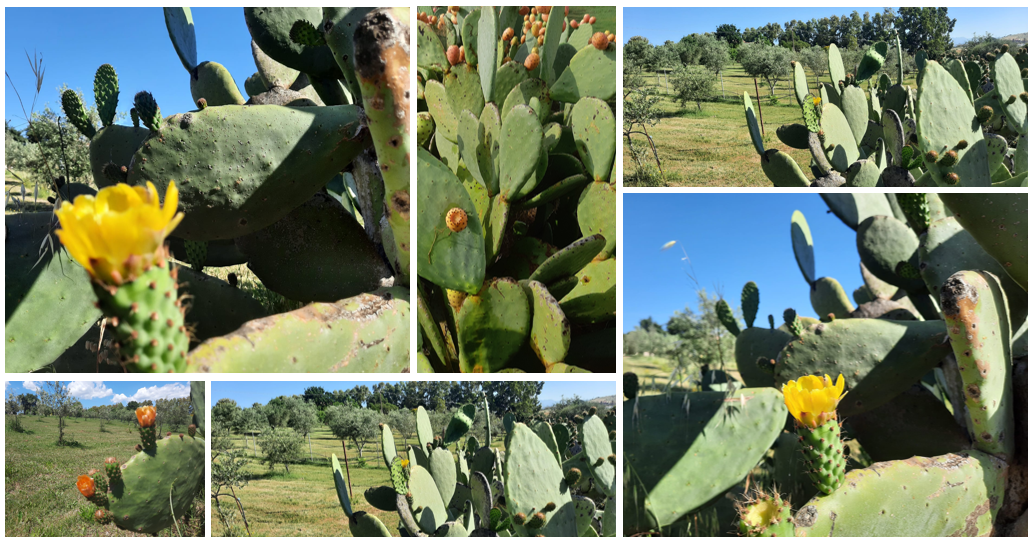
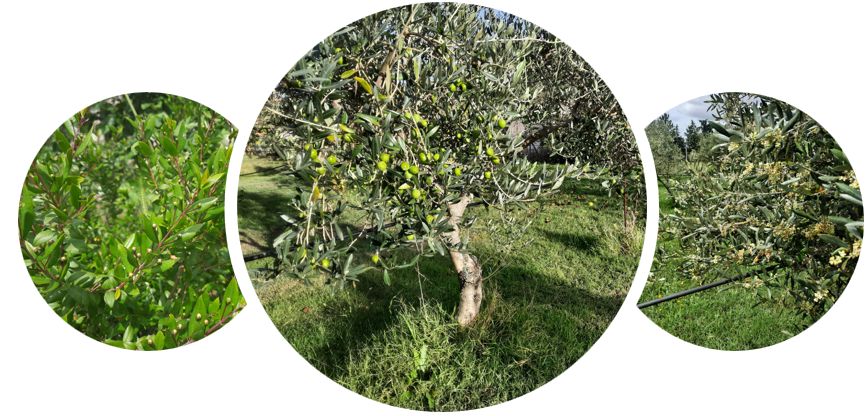
Flora · Sardinia
Examples of plant species growing on LoguBlu's Sardinian land.
05
In parallel, traditional knowledge, passed down through generations, draws on the use of certain plant species for skincare, particularly to soothe irritations, burns and other skin conditions.
Chapter II
Origin of the name LoguBlu
The name carries two meanings:
- The name LoguBlu means "Blue Zone" in the Sardinian language the founder's mother tongue, along with Italian.
- It also refers to the Logudòro, the Sardinian sub-region from which the founder originates, popularly translated as "place of gold" due to the fertility of its lands.
The LoguBlu logo features a blue circle, evoking the boundary drawn by Poulain and Pes around the "Restricted Blue Zone". This circle symbolises a defined area, mirroring the longevity territories identified around the world.
It is also designed as the extension of an arm ending in a hand, whose raised fingers symbolise the harvesting of natural molecules from these territories. Some interpretations also see waves in these shapes, integrating the marine dimension particularly that of algae.
This design conveys the idea of a connection between human biology and the ecosystems specific to longevity territories.